Improving beach accessibility at Waihī Beach
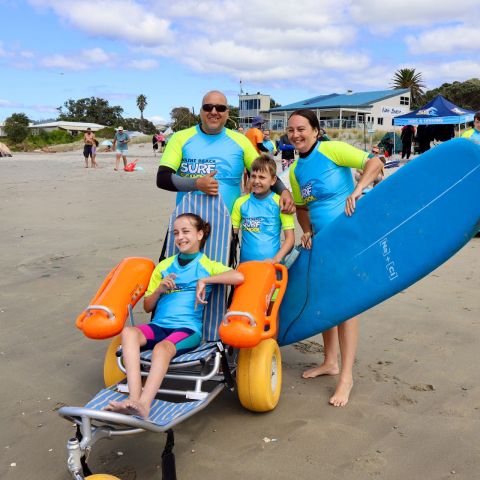
A new accessible changing facility has recently opened at the Waihī Beach Surf Lifeguard Club, marking an important step forward for accessibility at one of the region’s most popular beaches. Acorn Foundation attended the opening alongside the many organisations, funders and community members who have helped bring this project to life.
The facility has been purpose-built to support people with mobility limitations and more complex access needs. It includes a ceiling hoist, a height-adjustable adult changing table, an accessible toilet and shower, and enough space for carers and support people. Having these features on site makes a practical difference, it means people can come to the beach, spend time in the water, and have a safe and appropriate space to change before and after.
What makes this development particularly effective is how it fits into a wider set of accessibility improvements already in place at Waihī Beach. Over the past few years, beach access mats have been installed to create a stable pathway across the sand, making it easier for wheelchair users and those with limited mobility to get closer to the water. Beach wheelchairs are also available, designed specifically to move across soft sand and support people into the ocean.
Taken together, these features open up a range of options that haven’t always been available. People can now move from the car park to the shoreline more easily, use specialised equipment to access the water, and return to a facility that meets their needs. Without each of these elements working together, the experience can still be limited, so having all of them in place makes a real difference.
It also means visits to the beach become more practical for a wider range of people. Those who require support can be assisted using the hoist and changing equipment. Families can plan outings knowing there are appropriate facilities available. Community groups running inclusive programmes, such as adaptive surfing, have the infrastructure they need to operate more effectively and include more participants.
During the opening event, these features were put into action. Attendees were able to see how the changing facility works alongside the access mats and beach wheelchairs, and how it supports activities happening on the sand and in the water. It provided a clear picture of how accessible infrastructure can enable participation, rather than limit it.
This project has been delivered over time, with different stages building on each other. Earlier work focused on improving physical access to the beach itself, while this latest stage adds the facilities needed to support a full visit. It’s a good example of how accessibility improvements often need to be approached as a complete system, rather than a single upgrade.